LIGHTLESS
Source
What is light?
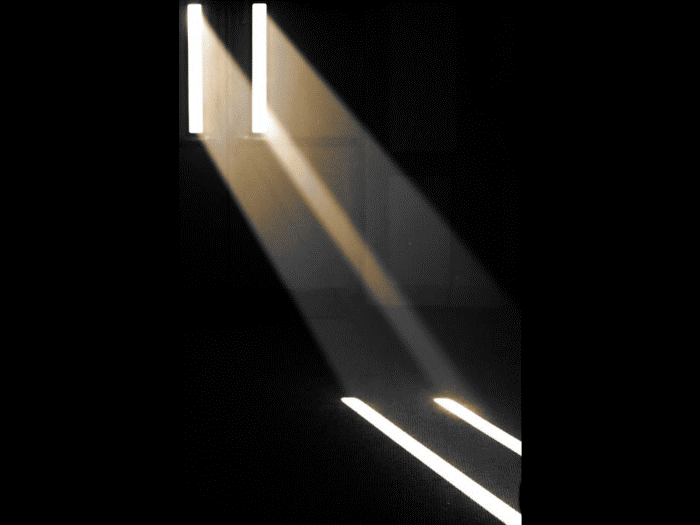
Light is the radiant energy capable of exciting the retina and producing visual sensation. It is made up of tiny particles called photons and travels as an electromagnetic wave. Light is a very small part of the broad spectrum of electromagnetic radiation. Distributed according to wavelength or frequency, these radiations range from cosmic rays to radio waves. Light corresponds to the part of the spectrum to which visual receptors are sensitive; this is called the visible spectrum.
What is the impact of the absence of light on human beings?
The lack of light or even the absence of light has a negative effect on us. The production of melatonin (a hormone secreted during the night by a small gland in the brain. It has a profound influence on our biological rhythms and increases when light levels are low and at night, while the production of cortisol (a hormone secreted by the adrenal gland. It plays a role in the body's reaction to stress as well as in the metabolism of food), increases when the light level is high. Too little light can lead to a slight depression, especially during the winter period, which is called Seasonal Affective Disorder.
What are the solutions?
In the medical sector, light therapy has long been used to reduce the effects of seasonal depression. The principle of light therapy is to expose oneself every morning, between 10 and 30 minutes, to the light of specific lamps of 10,000 lux, which does not prevent one from reading, having breakfast or applying make-up.
THE DARKEST COLOR
HOW BLIND PEOPLE SEE

A STEP INTO THE VOID