THE DARKEST COLOR
Source
Black is an interesting color, rich in symbolism, but it has also raised some debate because of its nature. Is it a color or, on the contrary, the absence of color? One thing is certain, black absorbs light. From there, comes a race to the most intense black: Who will manage to achieve a perfect black color that absorbs 100% of the visible light?
The race started in 2003 when the National Physical Laboratory in the United Kingdom (UK) created a surface treatment called “Super black”. While conventional black paint absorbs around 97.5% of visible light, Super black can absorb 99.65% in normal circumstances and can absorb up to 99.9% at an angle of incidence of 45°.
9 years later, a new blackest black came through: the Vantablack. Created in 2012 by Surrey Nanosystems in the UK, it consists of carbon nanotubes arranged vertically and tightly packed together. When light hits the coating, instead of being reflected, it is scattered by the carbon nanotubes and 99.965% ends up being trapped in the millions of nanotubes.
The monopoly of the deepest black of Vantablack was disputed in 2014 by the Belgian artist Frederik De Wilde and his NANOblck-Sqr#1. Also based on carbon nanotubes and developed in collaboration with NASA, De Wilde claims his work is the world's first blackest-black artwork in the world which consists of approximately 99,9% air.
But Vantablack sold its exclusive rights to an artist : Anish Kapoor. This led to a showdown with Stuart Semple who was unable to use the coating in his work. Therefore, Semple created his own black which is currently the blackest and mattest acrylic paint and is accessible to anyone but Anish Kapoor. And even “by adding this product to your cart you confirm that you are not Anish Kapoor, you are in no way affiliated to Anish Kapoor, you are not purchasing this item on behalf of Anish Kapoor or an associate of Anish Kapoor.”
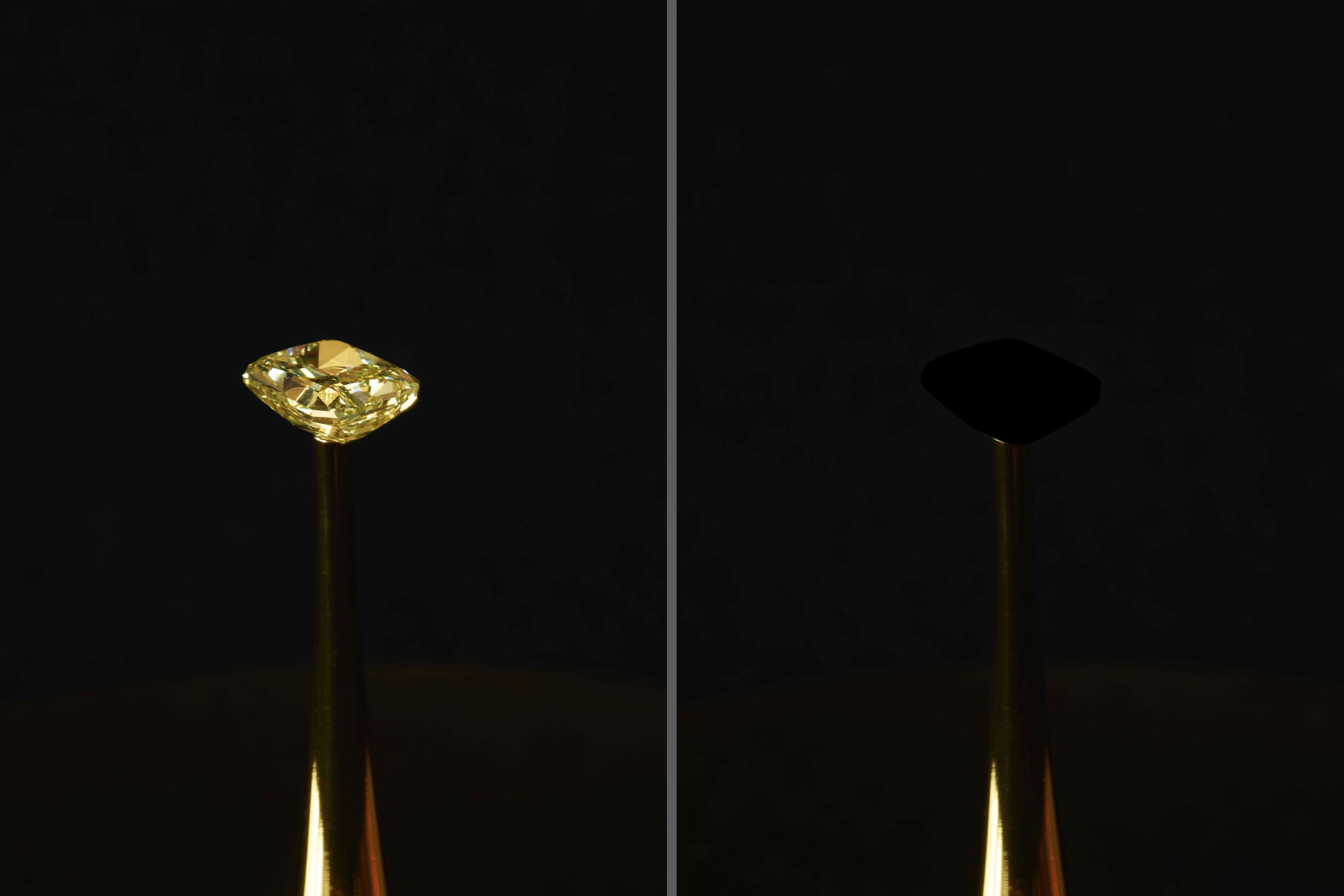
The last competitor of the Blackest black was made by the MIT in 2019. It is based on the same principle: Vertically Aligned carbon NanoTubes Arrays (VANTA) although it was created by accident. But this time, the foil captures at least 99.995 percent of incoming light at every angle, even with imperfections on the surface like bumps or ridges, making it to this day the blackest material. But as Brian Wardle, professor of aeronautics and astronautics at MIT, says “Someone will find a blacker material, and eventually we’ll understand all the underlying mechanisms, and will be able to properly engineer the ultimate black.”
How blind people see
Lightless
Without fears